Hackers Are Raising Freezer Temperatures. That’s Not a Metaphor.
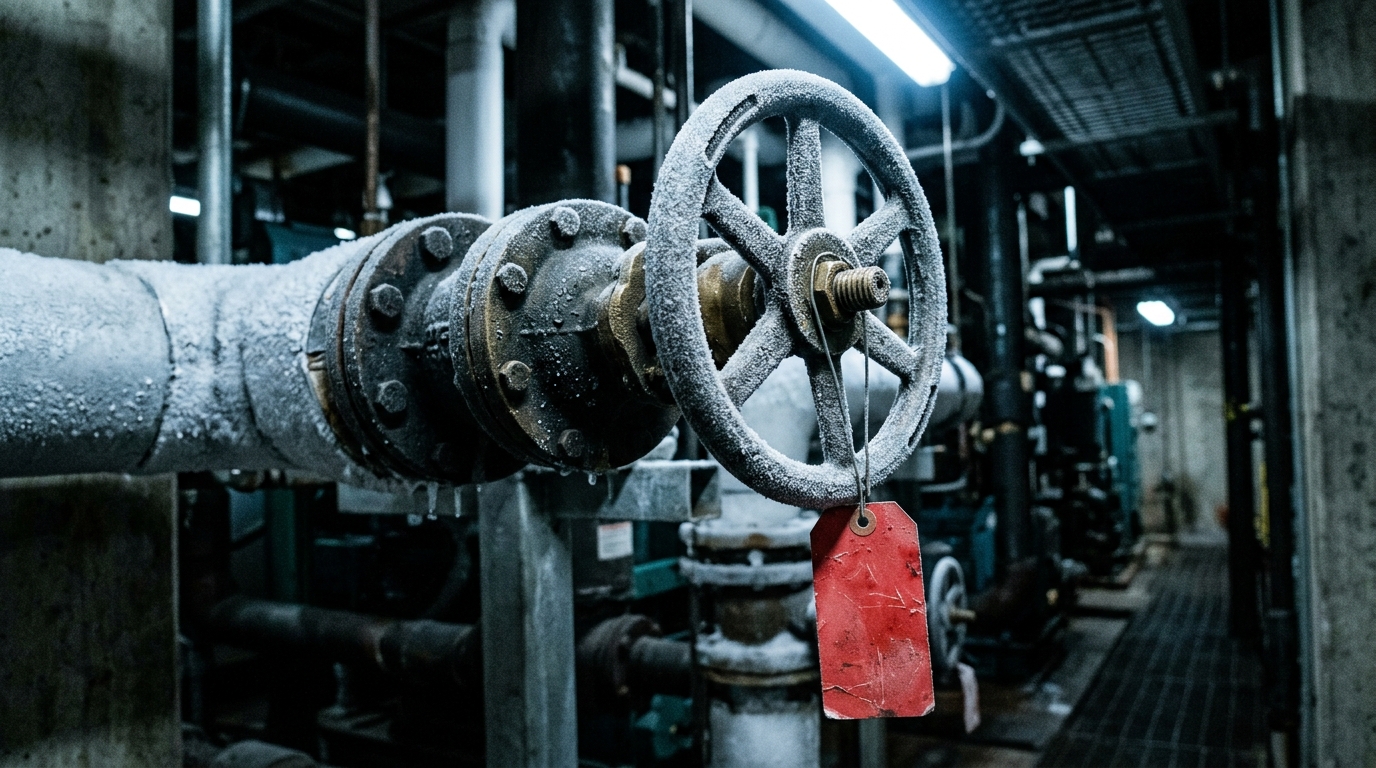
On November 9, 2026, CISA, the FBI, HHS, USDA, and the DOT issued a joint advisory warning that threat actors are actively attacking industrial refrigeration and cold-chain monitoring systems. The attacks aren’t theoretical. In the weeks before the advisory, hundreds of supermarkets across Europe had their refrigeration controllers compromised, with temperatures pushed as high as 50 degrees Celsius. Food spoiled. Equipment was damaged. The French Blood Establishment confirmed that a cybersecurity incident affecting a refrigeration equipment provider raised temperature and defrost settings to “extremely high levels” at three facilities storing blood plasma.
If your business runs refrigeration, cold storage, or any kind of temperature-controlled environment, this is worth your attention. Restaurants, food distributors, pharmacies, medical offices, and labs in NJ and NYC all fall into this category. The attack method is straightforward: find an internet-accessible controller, exploit a weak or default configuration, and start forcing the unit into continuous heating and defrost cycles. The result is inventory loss, potential equipment fires, and in the worst cases, harm to consumers.
Why These Systems Are So Easy to Hit
The advisory points to authentication bypasses, arbitrary code injection, and weak configurations as the primary ways attackers get in. That’s not exotic. That’s what happens when a piece of operational technology gets connected to the internet without anyone treating it like a security asset.
Data from Censys shows that as of early November 2026, there were still 708 exposed Danfoss StoreView instances globally and 2,420 exposed Copeland/Dixell XWEB instances. Those numbers had already dropped significantly after the European attacks drew attention, but hundreds of systems are still sitting open. North America accounts for roughly 38% of global industrial control system exposure, according to Censys. That’s a large share of a very large problem.
This is the same class of issue we’ve covered with building automation controllers from Johnson Controls. OT devices get installed, connected, and then forgotten. Nobody patches them. Nobody checks whether they’re exposed to the internet. They run for years on default credentials.
What to Actually Do If You Run Cold Storage
The advisory gives specific guidance. Here’s what matters most for a small or mid-size business:
- Find out whether your refrigeration controllers are reachable from the internet. Your IT team or MSP should be able to confirm this. If you don’t have someone doing this, that’s the first gap to close.
- Change default passwords on every controller. This sounds basic because it is, but it’s the most common failure point.
- Isolate OT devices from your main business network. A refrigeration controller has no reason to share a network segment with your point-of-sale system or your email.
- Remove remote access you don’t actively use. If a vendor set up remote access during installation and nobody uses it anymore, disable it.
- Replace legacy devices that can’t be updated. If the firmware is end-of-life, the device is a liability.
Strong authentication matters too. If your controller supports it, require it. If it doesn’t, that’s a reason to prioritize replacement.
The Broader Pattern Here
Censys noted that these refrigeration attacks are the latest in a series of incidents targeting critical infrastructure, alongside gas station tank gauges, air raid systems, and water towers. The common thread is internet-exposed industrial control systems with weak or no authentication. This isn’t a new problem. It’s a problem that’s been reported on for years and still hasn’t been fixed at scale.
For a small business, the practical takeaway is to treat any connected device that controls physical equipment as a security concern, not just a facilities concern. If it has an IP address and it controls something that can break or burn, it needs to be on someone’s security checklist.
If you’re not sure whether your building systems or cold storage controllers are exposed, that’s exactly the kind of thing an IT assessment can surface before an attacker finds it first. Exine offers IT assessments for NJ and NYC businesses that include a look at network exposure and connected device inventory.
FAQ
Can a hacker really cause a fire by attacking a refrigeration controller?
According to the joint advisory from CISA, FBI, HHS, USDA, and DOT, yes. Forcing a unit into continuous heating and defrost cycles can create fire hazards and damage equipment, in addition to spoiling inventory. The risk is physical, not just digital.
How do attackers get into refrigeration systems in the first place?
The advisory identifies authentication bypasses, arbitrary code injection, and weak configurations as the main entry points. Many controllers are internet-accessible, run on default credentials, and haven’t been patched. That combination makes them straightforward targets.
Does this only affect large grocery chains or food distributors?
No. The European attacks hit major supermarket chains and small grocers and butchers alike. Any business running internet-connected refrigeration or cold-chain monitoring is potentially exposed, including restaurants, pharmacies, and medical offices.
What’s the difference between IT security and OT security for a small business?
IT security covers computers, servers, and software. OT security covers physical control systems like refrigeration units, HVAC, and building controllers. Many small businesses manage IT but leave OT devices unmonitored. That gap is exactly what these attacks exploit.